Research on published medical literature for treating teams and researchers. Not medical advice.Figures updated 29 November 2026
Linitis PlasticaResearch Foundation
AI-assisted cancer research

An AI research team for gastric linitis plastica

Our goal is a cure. AI agents read and cross-check the published evidence on this rare, aggressive stomach cancer, connect findings across diseases, and send the most promising leads to experts. Every finding is traced to its source.

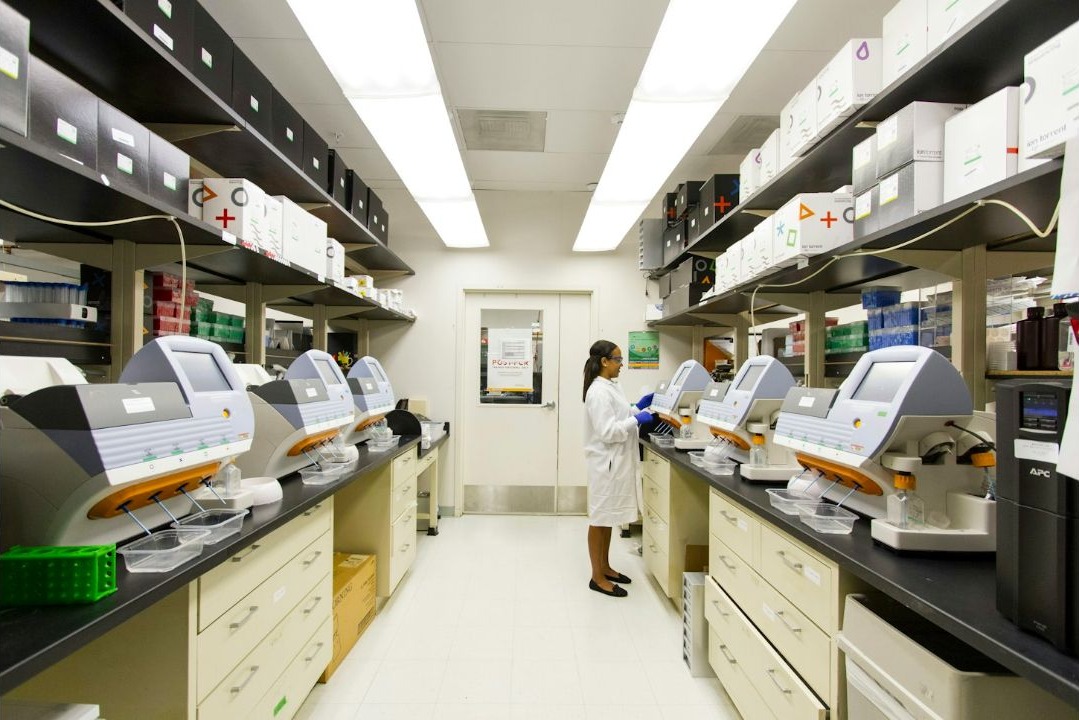
A scientist working at a laboratory bench
The project works only from published research and public trial records. It gives no medical advice.
110,000+publication records in the library
13,000+sources reviewed individually by an AI agent
37,000+findings recorded, each with a checked quotation
20,000+findings confirmed by a blind second reading
What we ask

Three questions drive the research

Answering them means reading far more research than any one person could, including studies of other cancers and other diseases whose findings might carry over.

  1. 1

    What distinguishes a lasting response?

    Exceptional responses can suggest which features to measure when comparing patients with different outcomes.

  2. 2

    What allows cancer cells to persist?

    We examine evidence about tumour biology, treatment resistance and the surrounding tissue, keeping each study population and experimental system distinct.

  3. 3

    What drives spread to the peritoneum?

    We trace findings across study populations and look for measurements that could distinguish competing explanations.

My uncle was diagnosed with a rare, aggressive type of stomach cancer. I was told there is no cure. I refuse to accept that.

Belal Hany, founder
Why this exists

Linitis plastica is under-researched, and the studies that might matter are scattered across many fields. Two years ago a project like this was not possible for one person. Now AI makes it possible to go through more than 100,000 papers and look for leads, and anything promising goes to experts.

Read our story
How it works

A team of agents, each with one job

Some agents screen and read. Others check those readings without seeing the first reader's reasoning, and software checks every quotation against the source. Only then do discovery agents use the evidence, while other agents try to knock their ideas down.

Read the full method

The research pipeline

Each role is held by a separate agent or program and hands its output to the next as a stored record.

Build and check the evidence

  1. Sources

    Published literature

    PubMed, PubMed Central and ClinicalTrials.gov.

    110,000+ records
  2. AI agents

    Screening

    Label every title and abstract for relevance.

    109,000+ labelled
  3. AI agents

    Reading

    Record population, measures, results, limits and a quotation.

    13,000+ sources
  4. Software

    Quotation check

    Match every quotation to the stored source text.

    37,000+ findings
  5. AI agents

    Blind second reading

    Re-read the source before seeing the first reader's reasoning.

    20,000+ confirmed

Investigate new ideas

  1. Library

    Layered evidence

    Preliminary, reviewed, verified and senior-reviewed, kept apart.

  2. AI agents

    Independent leads

    Develop ideas before seeing one another's conclusions.

  3. AI agents

    Challenge

    Search for contrary evidence, failed trials and shared data.

  4. AI agents

    Referees

    One for, one against, and an adjudicator ruling point by point.

  5. Outputs

    Hypotheses and test cards

    Questions for researchers and treating teams.

Figure 1. A second reading is always made by a different agent from the one that wrote the entry. Agreement between AI readers shows a paper was read correctly; it is not replication.
The library

What the evidence base holds

Connecting discoveries across diseases is the central purpose of the project. Screeners keep any paper from another cancer or disease that reports a specific mechanism, target or treatment result, even when its relevance is not obvious.

From retrieval to reading

Screening is complete: every retrieved record has a label.

Figure 2. Records labelled core or transfer are queued for individual reading.

How titles and abstracts were labelled

Papers that may transfer from other diseases outnumber those on the disease itself by more than four to one.

Figure 3. Labels from the latest batches stay provisional until a random sample is re-screened.

Where recorded findings come from

Most published evidence comes from laboratory models. Every finding keeps its source system, so a result in a cell line is reported as a result in a cell line.

Figure 4. Share of recorded findings by type of evidence. Source: project database, 29 November 2026.
Discovery

From evidence to questions worth testing

A hypothesis needs two independent lines of evidence, human data for why the effect may be stronger in this tumour, and a feasible test that could refute it. Each idea then faces agents whose only job is to find the evidence that sinks it.

What happened to the ideas

Outcomes of the last two completed discovery rounds. Most ideas do not survive, and the record says why.

Figure 5. Rejected ideas are kept with the reason and can be reopened on new evidence. Source: discovery status report, 28 November 2026.
Round 3 result

Sixteen ideas were sketched. None met the standard for a hypothesis.

Ten were killed or withdrawn under challenge, five were dropped by their authors and one was developed in full and then rejected. The project reports that result as it stands. Where a question turns on a measurement never made in this disease, the team writes a decisive test card instead: what to measure, in what material, and what each result would mean, fixed in advance.

Claudin 18.2 treatment

What does zolbetuximab add to first-line chemotherapy in claudin 18.2-positive gastric cancer, and which of the reported limits explains why the gain is modest?

From the hypothesis register

Peritoneal spread

When scans are unclear in linitis plastica, can tests on abdominal fluid establish peritoneal involvement less invasively, and how much does the answer change the outlook?

From the hypothesis register

The evidentiary threshold is never lowered to produce a surviving hypothesis.

Project standard for all discovery work
Standards

Our commitments

The research is carried out by AI agents, so its safeguards are written down and, wherever possible, checked by software.

  • Every claim traces to a source

    A finding enters the library only with a quotation from the study, matched by software against the stored text.

  • People and laboratory models are kept apart

    Each finding records whether it came from patients, a trial, an animal, a cell line or patient tissue.

  • Checking is recorded, not assumed

    The record shows which findings had a second reading, at what depth, and which are not yet verified.

  • Negative results are kept

    Failed trials, contradicting studies and rejected ideas stay in the library with the reason they were set aside.

  • AI agreement is not replication

    Two AI readings that agree show that a paper was read correctly, not that its result is true.

  • No treatment recommendations

    Clinical findings are framed as questions for treating teams. Nothing here suggests the use of any medicine.

Latest

Updates from the research

All updates
  • Method

    New reviews are now made from full text only

    Papers available only as an abstract are held back, not reviewed, until a full text is found.

  • Discovery

    Third discovery round: no idea met the standard

    Sixteen ideas were sketched and tested against the evidence; the result is reported as it stands.

  • Discovery

    Decisive test cards introduced

    Each card names one unmade measurement and fixes in advance what each result would mean.